


Beyond the Golden Gate: IDEA at 50 and the Future of Inclusive Education in California

Beyond the Golden Gate: IDEA at 50 and the Future of Inclusive Education in California




Beyond the Golden Gate IDEA at 50 and the Future of Inclusive Education in California
- Kate Caldwell, PhD, Director of Research and Policy
Beyond the Golden Gate IDEA at 50 and the Future of Inclusive Education in California
- Kate Caldwell, PhD, Director of Research and Policy
On May 8, 2026 DRC and the Disability Rights and Education Defense Fund (DREDF) hosted an education summit at the historic Ed Roberts Campus in recognition of the 50th anniversary of the Individuals with Disabilities Education Act (IDEA). The day brought together a panel of leading experts in the disability education space to reflect on the history of education for students with disabilities and to look ahead to building better policy going forward. In conjunction with this landmark event The Center for Racial and Disability Justice (CRDJ) at the UCLA School of Law produced the in-depth analysis, “Beyond the Golden Gate: IDEA at 50 and the Future of Inclusive Education in California” We at DRC are very grateful to CRDJ for creating this remarkable piece of work as we continue the fight to uphold and expand the IDEA.
May, 2026
The Center for Racial and Disability Justice (CRDJ) at the UCLA School of Law advances research, advocacy, education, and community partnership at the intersections of race and disability. Through legal scholarship, policy analysis, public education, and collaborative initiatives, CRDJ works to challenge systemic inequities and build more just, accessible, and inclusive futures.
IDEA’s Promise
The Individuals with Disabilities Education Act (IDEA) is one of the most important disability civil rights laws in U.S. history. The 50th anniversary is a moment of celebration, reflection, and renewed commitment. IDEA helped transform public education by recognizing that children with disabilities have a right to attend school, receive individualized supports, and learn in the least restrictive environment. The law also reflects a broader principle: disabled children are not outside the responsibility of public education. They are students with rights, needs, strengths, and futures. Yet fifty years later, many students with disabilities (especially those who are racialized, low-income, English learners, LGBTQ+, and involved in foster care or juvenile legal systems) continue to face exclusion, under-identification, over-discipline, segregation, restraint, seclusion, policing, and inadequate access to meaningful education.
For California, this anniversary is both a celebration and a test. California is one of the largest public education systems in the country, serving more than 5.8 million K–12 students in 2024–25.1 California law now declares that all pupils, including those with disabilities, are general education pupils first.2 Inclusion in general education classrooms and programs should be considered the first setting unless the individualized education program (IEP) determines another setting is needed for a free appropriate public education (FAPE). Further, least restrictive environment (LRE) data should inform continuous improvement. The state has made important commitments to inclusion and has invested in statewide improvement efforts. At the same time, California continues to lag national averages on key inclusion measures, and students with disabilities continue to experience disparities in graduation, absenteeism, discipline, and access to general education. According to the State of the State: California Disability Policy in 2024, many local education agencies (LEAs) were not expected to meet the statewide goal for 70% of students with disabilities spending at least 80% of the day in general education settings.
IDEA’s promise remains unfinished. Rights on paper do not always translate into belonging, safety, dignity, meaningful learning, communication access, culturally responsive instruction, or equal opportunity. The central question for this anniversary is not only what IDEA made possible, but what California must do next to make IDEA’s promise real for every student with disabilities.
California’s IDEA Landscape
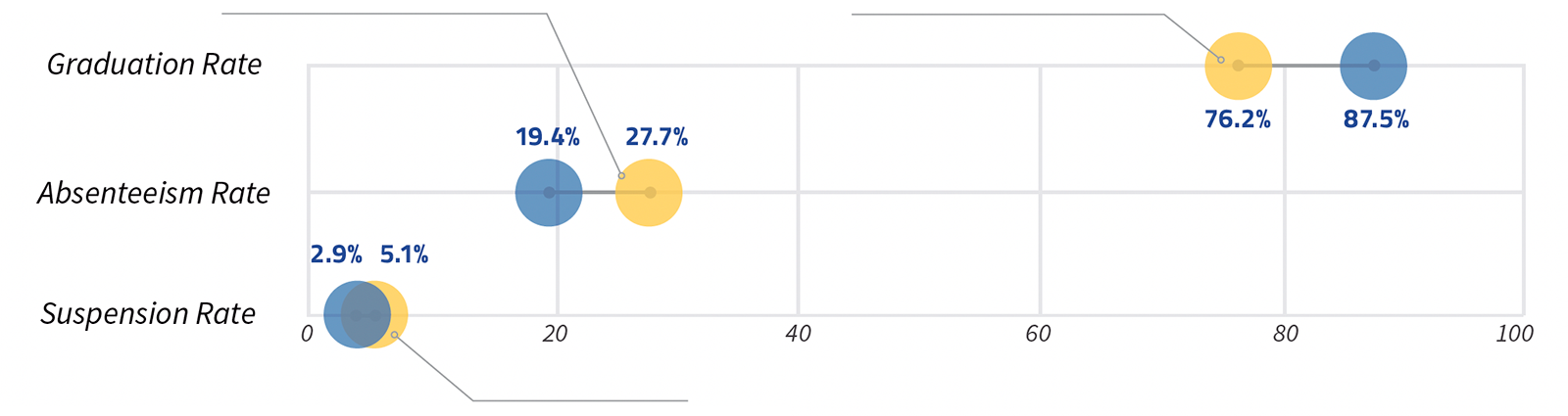
California serves one of the largest and most diverse student populations in the country. California’s Special Education Enrollment by Program Setting report provides a useful starting point because it reports where students with active IEPs receive the majority of their special education and related services. CDE explains that the report also includes LRE-related general education participation ranges and is based on annual Census Day enrollment data submitted through CALPADS. The state’s end-of-year data show improvements in graduation, chronic absenteeism, and suspension, but students with disabilities continue to experience gaps.
California IDEA & Inclusion Facts
+9% SIP districts
+4% USA
+2% California
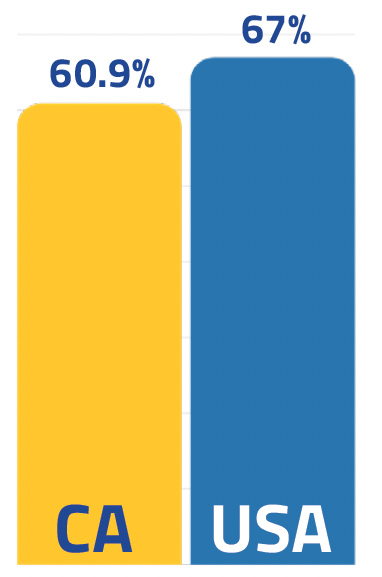
SIP-supported (i.e., Supporting Innovative Practices) districts showed faster growth in inclusive placement than statewide and national trends. Over five years, SIP districts showed nine percentage points of growth, compared with two points statewide and four points nationally.4
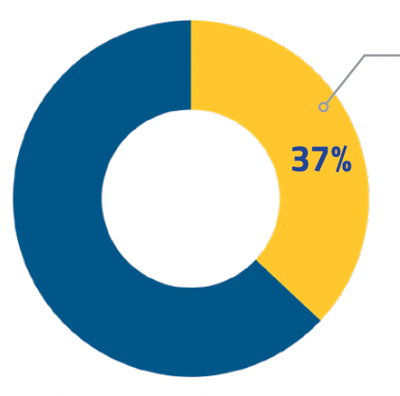
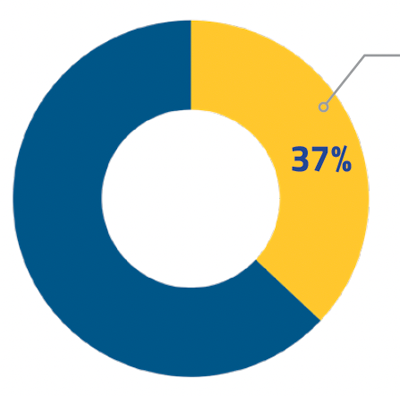
In 2022–23, students with specific learning disabilities (SLD) represented 37% of California students served under IDEA.7
SIP-supported (i.e., Supporting Innovative Practices) districts showed faster growth in inclusive placement than statewide and national trends. Over five years, SIP districts showed nine percentage points of growth, compared with two points statewide and four points nationally.4
These data are important, but they are not a full measure of inclusion. Placement data do not show whether students have communication access, culturally responsive instruction, trained staff, assistive technology, behavioral supports, belonging, or meaningful participation.
California’s Inclusion Gap
California has made progress, but the state continues to lag national averages. Inclusive education is more than simply a placement requirement. It involves high-quality learning opportunities, instruction responsive to learner variability, meaningful family participation, grade-level content, belonging, and full participation in diverse learning communities.4 To put a few of the facts above in this context:
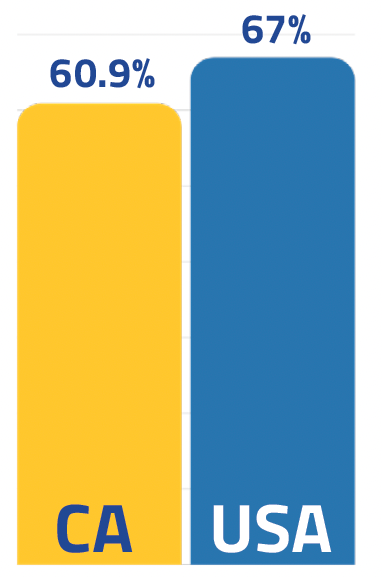
- In 2024, 60.9% of California students with disabilities were educated in general education classrooms for 80% or more of the day.
- Nationally, about 67% of students with disabilities were educated in general education classrooms for 80% or more of the day.
- Over the prior five years, California’s growth on this inclusion measure was slower than national growth.
Staffing and funding shape whether IEPs become real. Students cannot receive timely evaluations, services, accommodations, communication access, behavioral supports, assistive technology, or transition planning if districts lack qualified staff and sustainable funding.
California’s special education funding problem has become more visible. Special education costs have risen faster than dedicated state and federal categorical funding, leaving districts to cover a growing share of legally required services with unrestricted general-purpose funds. This creates difficult trade-offs. Districts must comply with IDEA and state special education obligations, but doing so can draw resources away from other programs, while efforts to contain special education costs can increase litigation risk and threaten service quality. The current California debate is structural. It is less about whether disabled students “cost more” and more about whether the state’s funding model is adequate, predictable, and aligned with the actual supports students need.8,9

Race, Disproportionality & Equity in IDEA
IDEA cannot be separated from race. Special education has long been a site where race and disability are co-constructed through school decision-making wherein disproportionality raises concerns about systemic bias, educational equity, and civil rights violations. This intersection determines who is perceived as needing support, who is viewed as disruptive, who is labeled, who is segregated, and who is punished.10,11
In 1997, IDEA amendments began to require states to collect and report data on racial and ethnic disproportionality in special education, but it lacked standardization and consistency. The IDEA 2004 reauthorization expanded the focus on disproportionality, requiring states to use comprehensive coordinated early intervening services (CCEIS) for districts that showed significant disproportionality12 and introducing provisions to monitor and remedy significant disproportionality.13 However, inconsistencies between states remained a persistent problem. Following a pivotal report, Breaking the School-to-Prison Pipeline for Students with Disabilities, from the National Council on Disability (NCD), the U.S. Department of Education issued the Equity in IDEA rule in 2016 under the Obama administration. According to the Rule, “significant disproportionality” refers to racial and ethnic disparities in:
- Identification of children with disabilities
- Classification under specific disability categories
- Placement in segregated settings
- Disciplinary removals
The Rule also required all states to use a risk ratio calculation with thresholds for action and required budgetary set-asides for CCEIS when flagged.
While the Trump administration has not formally rescinded Equity in IDEA, it has been significantly undermined. The first delayed its implementation until a Federal court ordered it be reinstated,14 while the second has moved to remove the significant disproportionality data collection from the annual IDEA Part B state application package.15,16 This move should be understood alongside the administration’s April 2025 executive order on school discipline, which rejects the use of racial discipline disparities as a basis for federal civil-rights scrutiny and directs ED to issue new Title VI discipline guidance. The result is a shift toward deregulation, reduced transparency, and weaker federal oversight of racial and disability disproportionality in special education.
More broadly, the administration’s FY 2027 special education budget frames IDEA policy around “returning education to the states,” “streamlining funding,” and “expanding flexibility,” while proposing to consolidate nearly all IDEA formula and competitive programs into a single state formula grant, even as it says states would continue to meet core IDEA accountability and reporting requirements.
This federal retreat makes state policy more critical. If this anniversary is to mark a renewed commitment to equity rather than a rollback of federal oversight, states must take responsibility for preserving robust data collection, transparency, and accountability for racial and disability disproportionality. It is especially important that California state leadership ensure IDEA’s promise is not reduced to procedural compliance, but carried forward as a substantive commitment to educational access, inclusion, and equity for multiply marginalized students with disabilities.
Race and disability are co-constructed through school decision-making, shaping which students are perceived as needing support and which are treated as disruptive, dangerous, or disporable.
Early Exclusion Begins in Preschool
- Black preschool children accounted for 17% of preschool enrollment, but 31% of preschool children who received one or more out-of-school suspensions and 25% of those expelled.
- Black preschool boys accounted for 9% of preschool enrollment, but 23% of preschool children who received one or more out-of-school suspensions and 20% of preschool children who were expelled.17
- Preschool children with disabilities served under IDEA represented 24% of preschool enrollment, but 34% of preschool children who received one or more out-of-school suspensions and 62% of preschool children who were expelled.17
Discipline, Restraint, Seclusion & Youth Policing
Discipline and policing continue to undermine access. Disabled students are overrepresented in exclusionary discipline, restraint, seclusion, referrals to law enforcement, and school-related arrests. Disabled students of color are especially vulnerable to being treated as threats rather than as students whose needs should be met. It is critical that discipline be framed as a disability justice issue, not simply coded as school climate. A student cannot be meaningfully included if they are repeatedly removed, restrained, secluded, handcuffed, referred to law enforcement, or punished for disability-related needs.
Race, gender, and disability converge in these discipline systems, shaping which students are seen as needing support, which students are treated as threats, and which students are pushed out of the protections IDEA was meant to guarantee.
- Black boys represented 8% of total K–12 enrollment, but 15% of students receiving one or more in-school suspensions, 18% of students receiving one or more out-of-school suspensions, and 18% of students expelled.17
- Black girls represented 7% of total K–12 enrollment, but 8% of students receiving one or more in-school suspensions, 9% of students receiving one or more out-of-school suspensions, and 8% of students expelled.17
- Black boys were nearly two times more likely than White boys to receive an out-of-school suspension or expulsion.17
- Black girls were nearly two times more likely than White girls to receive in-school suspension, out-of-school suspension, or expulsion.17
- White students were overrepresented among students receiving Section 504 services (60% of 504-only students vs. 46% of overall enrollment).18
- Black students were slightly overrepresented among IDEA students (17% of IDEA vs. 15% of total enrollment).18
- Boys were disproportionately represented: 59% of 504-only students and 66% of IDEA students compared to 51% of total enrollment.18

California Racial Equity Concerns
California’s multilingual student population makes identification especially important. Research on English learners and special education shows that disproportionality varies by language proficiency, grade level, disability category, program type, and placement.19
Specific learning disabilities (SLD) are the largest disability category among students served under IDEA in California. Moreover, they implicate some of the state’s most urgent equity questions, including early literacy, multilingual assessment, culturally responsive identification, access to general education, and whether students receive support before academic struggles become entrenched.
- In California, students with specific learning disabilities represented 37% of students served under IDEA in 2022–23.7
- Hispanic students represented 56% of all California students, but 68% of California students with SLD.7
- Black students represented 5% of all California students, but 7% of California students with SLD.7
- White students represented 21% of all California students, but 16% of California students with SLD.7
- Asian students represented 12% of all California students, but 3% of California students with SLD.7
As the largest disability category under IDEA in California, specific learning disabilities are deeply tied to questions of literacy, language access, identification, and timely academic support.
California Discipline, Restraint & Seclusion Facts
Students with disabilities are not only more likely to be suspended, they are also disproportionately subjected to restraint and seclusion practices that can cause physical injury, trauma, exclusion from learning, and loss of trust in school. These data should be understood as IDEA implementation data given they show whether students are receiving supports, services, behavioral interventions, communication access, and inclusive environments, or whether unmet needs are being converted into punishment and control.
- In 2021–22, California schools reported 6,026 physical restraint incidents, 529 seclusion incidents, and 97 mechanical restraint incidents.20
- In 2021–22, 1,888 students were physically restrained, 287 students were secluded, and 64 students were mechanically restrained.20
- Disability Rights California cautions that this data likely reflects significant underreporting as 74.0% of reporting school districts reported zero restraint or seclusion incidents.20
- Students with disabilities made up about 14% of California students but represented 88.7% of students physically restrained and 49.8% of students secluded.20
- Black students made up 5.2% of California’s student population but represented 17.5% of students physically restrained, 24.0% of students secluded, and 39.1% of students mechanically restrained.20
- Nonpublic schools accounted for 44.1% of all reported physical restraint incidents in California in 2021–22, but incidents are attributed to the student’s home district rather than independently reported by the nonpublic school, limiting effective oversight.20

California Youth Policing Facts
Youth policing data do not measure IDEA eligibility or IEP status. They are based on officer perception of disability during stops.21 Still, they provide critical context as they show how quickly disability can be read as threat in youth-facing systems, how disability is criminalized in education10, and how this feeds into the school-to-prison-pipeline. The 2025 California Racial and Identity Profiling Advisory Board (RIPA) data showed racial and disability disparities in arrests, use of force, searches, and handcuffing of youth:
- Officers arrested individuals with a perceived disability at higher rates (28.20%) compared to those without a perceived disability (14.0%).10
- Use of force was higher (48.4%) for youth perceived as having a disability compared to those not perceived as having a disability (11.0%).10
- Officers handcuffed 47.8% of youth stopped who were perceived to have a disability compared to 9.8% with no perceived disability.10
- Officers searched 46.8% of youth stopped who were perceived to have a disability compared to 12.2% with no perceived disability.10
California cannot measure IDEA only by whether students have IEPs or where students are placed. It must also ask whether students with disabilities, especially those who are multiply marginalized, are being supported in school, or controlled, removed, and criminalized when schools and systems fail to meet their needs.

A California Justice Vision for the Next 50 Years
The 50th anniversary of IDEA is a moment of celebration, gratitude, and renewed obligation. It reminds us that students, families, advocates, educators, and attorneys transformed American education by insisting that children with disabilities have a right to learn. But it also asks California to confront the distance between legal promise and lived reality.
The next fifty years of IDEA in California should be defined not only by compliance, but by justice. Compliance asks whether the paperwork is complete. Justice asks whether the student is learning, communicating, participating, supported, safe, respected, and able to belong.
A justice-centered IDEA agenda for California should include:
- Belonging, not just placement. Inclusion must mean access, support, relationship, dignity, and participation.
- Race-conscious IDEA implementation. California must confront disproportionality in identification, placement, discipline, restraint, seclusion, law enforcement referral, and family access to advocacy.
- Accurate and culturally responsive identification. California must address the risk that English learners are under-identified, misidentified, or denied both language and disability supports.
- Staffing as civil rights infrastructure. IEP services depend on trained and supported educators, aides, interpreters, related service providers, counselors, and administrators.
- Support, not punishment. Disability-related needs and behaviors should be met with services, accommodations, communication, care, and environmental change—not exclusion, restraint, seclusion, handcuffing, policing, or court involvement.
- Language and communication access. Deaf and hard-of-hearing students need language-rich environments, qualified educators, interpreters where needed, and meaningful communication access.
- Disability-specific expertise within inclusive systems. Inclusion should not erase the need for specialized instruction, orientation and mobility, assistive technology, Deaf education, blind/low-vision expertise, or student-centered placement decisions.
- Early inclusion. DREDF notes that preschool inclusion helps predict later inclusion, but California’s enacted 2024–25 budget rolled back state preschool inclusion of disabled children to 5%, compared with Head Start’s 10% enrollment requirement.
- Equitable family access. IDEA rights should not depend on a family’s money, English fluency, legal knowledge, or ability to fight.
- Transition as part of IDEA’s promise. Preparing students for further education, employment, independent living, and community life should be treated as central, not optional.
For Disability Rights California’s IDEA 50th Anniversary Summit, the message is clear. California can honor the IDEA best by defending it, funding it, enforcing it, and expanding the vision of what students with disabilities deserve in every classroom, school, district, early learning setting, and community.






- 1. a. b. California Department of Education 2024-25 Annual Enrollment Report
- 2. a. b. c. d. California Department of Education 2024‒25 End-of-Year Reports
- 3. California Department of Education 2025-26 Special Education Enrollment by Program Setting
- 4. a. b. c. d. Ripma, T., & Wall, A. (2026). Advancing Inclusive Education in California Schools. Policy Analysts for California Education (PACE).
- 7. a. b. c. d. e. f. National Center for Learning Disabilities California State Snapshot of Specific Learning Disabilities
- 5. a. b. c.
- 6. California Department of Education 2024–25 End-of-Year Results Information and Fact Sheet
- 8. Legislative Analyst’s Office. (2026, February 4). The 2026–27 budget: Proposition 98 guarantee and K–12 spending plan. State of California.
- 9. Willis, J., Krausen, K., Caparas, R., & Taylor, T. (2020). California special education funding system study: A descriptive analysis of special education funding in California. WestEd.
- 10. a. b. c. d. e. f. Caldwell, K., Morgan, J., and Itayem, K. (2026, January). Discrim in Education Brief. Center for Racial and Disability Justice, University of California, Los Angeles School of Law.
- 11. Skiba, R. J., Simmons, A. B., Ritter, S., Gibb, A. C., Rausch, M. K., Cuadrado, J., & Chung, C. G. (2008). Achieving equity in special education: History, status, and current challenges. Exceptional Children, 74(3), 264-288.
- 12. Sullivan, A. L., & Osher, D. (2019). IDEA’s double bind: A synthesis of disproportionality policy interpretations. Exceptional Children, 85(4), 395-412.
- 13. Zirkel, P. A. (2019). School resource officers and students with disabilities: A disproportional connection? Exceptionality, 27(4), 299-314.
- 14. Lundgren, R. (2021). Intersectionality in Equity in IDEA: A Way to Attack Disproportionality and Segregation. Rutgers Race & L. Rev., 23, 417.
- 15. Caldwell, K., Morgan, J., Jensen, J., & Nesbitt, D. (2025, October 21).RE: Proposed revision to the annual state application under Part B of the Individuals with Disabilities Education Act (IDEA) [Public comment letter]. U.S. Department of Education.
- 16. Agency Information Collection Activities; Submission to the Office of Management and Budget for Review and Approval; Comment Request; Annual State Application Under Part B of the Individuals With Disabilities Act as Amended in 2004, 91 Fed. Reg. 990 (Jan. 9, 2026).
- 17. a. b. c. d. e. f. 2020-21 Civil Rights Data Collection Student Discipline and School Climate in U.S. Public Schools
- 18. a. b. c. Profile of Students with Disabilities in U.S. Public Schools During the 2020-21 School Year
- 19. Sullivan, A. L. (2011). Disproportionality in special education identification and placement of English language learners. Exceptional children, 77(3), 317-334.
- 20. a. b. c. d. e. f. Disability Rights California. (2023, August 14). Restraint and seclusion in California schools: Findings and recommendations from the 2021–22 school year data.
- 21. https://oag.ca.gov/system/files/media/ripa-board-report-2025.pdf