

Peer Support Makes a Difference for People with Mental Health and Substance Use Disorders
Peer Support Makes a Difference for People with Mental Health and Substance Use Disorders




For the past 23 years, people who work in state hospitals and mental health advocates have gathered at the Patients’ Rights Advocacy Training (PRAT) conference in Sacramento, CA.
This May Mental Health Awareness Month, PRAT serves as a reminder that peer support for people with mental health disabilities is a crucial role for our society and a calling to support those who otherwise might not have a voice.
The conference spanned three days in April 2026, with 97 advocates and staff. PRAT functions not only as a time to gather, but also as a time to learn, advocate, and swap stories and experiences of the singular work of peer support. This year’s conference included sessions about the history of involuntary mental health treatment, mental health plan grievances, understanding the ADA, the rights of people with intellectual and developmental disabilities, and peer services.
The Peer Perspective
Peer services are programs in which the person providing non-clinical care has lived experience with what the person needing care is going through. Hearing from someone who has walked in your shoes is deeply powerful, which is why peer specialists are an integral part of the mental health and recovery process.
Peer support services can take the form of capital-P “Peers,” who are paid for their lived experience to connect with people, and of lowercase p “peers” who volunteer their time, possibly through support and recovery groups. Paid peers, who receive a Peer Support Specialist Certification, have been recognized by the state as a type of medical provider since 2020.
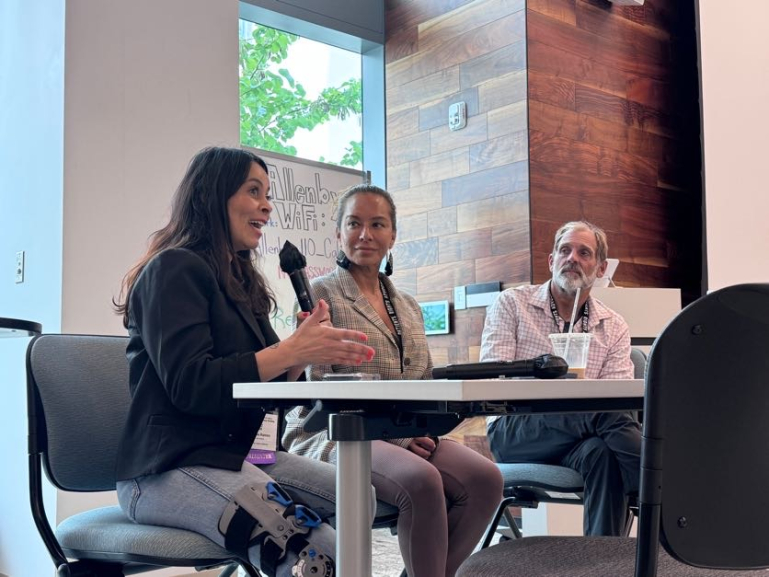
Peer Support Session at the Patients' Rights Advocacy Training (PRAT)
The peer support session was a panel discussion between speakers Jason Robison, Vanessa Ramos, and Carolina Ayala, who all have lived experience with mental health and/or substance use disorder.
They each shared how getting connected to a peer was integral to their recovery process.
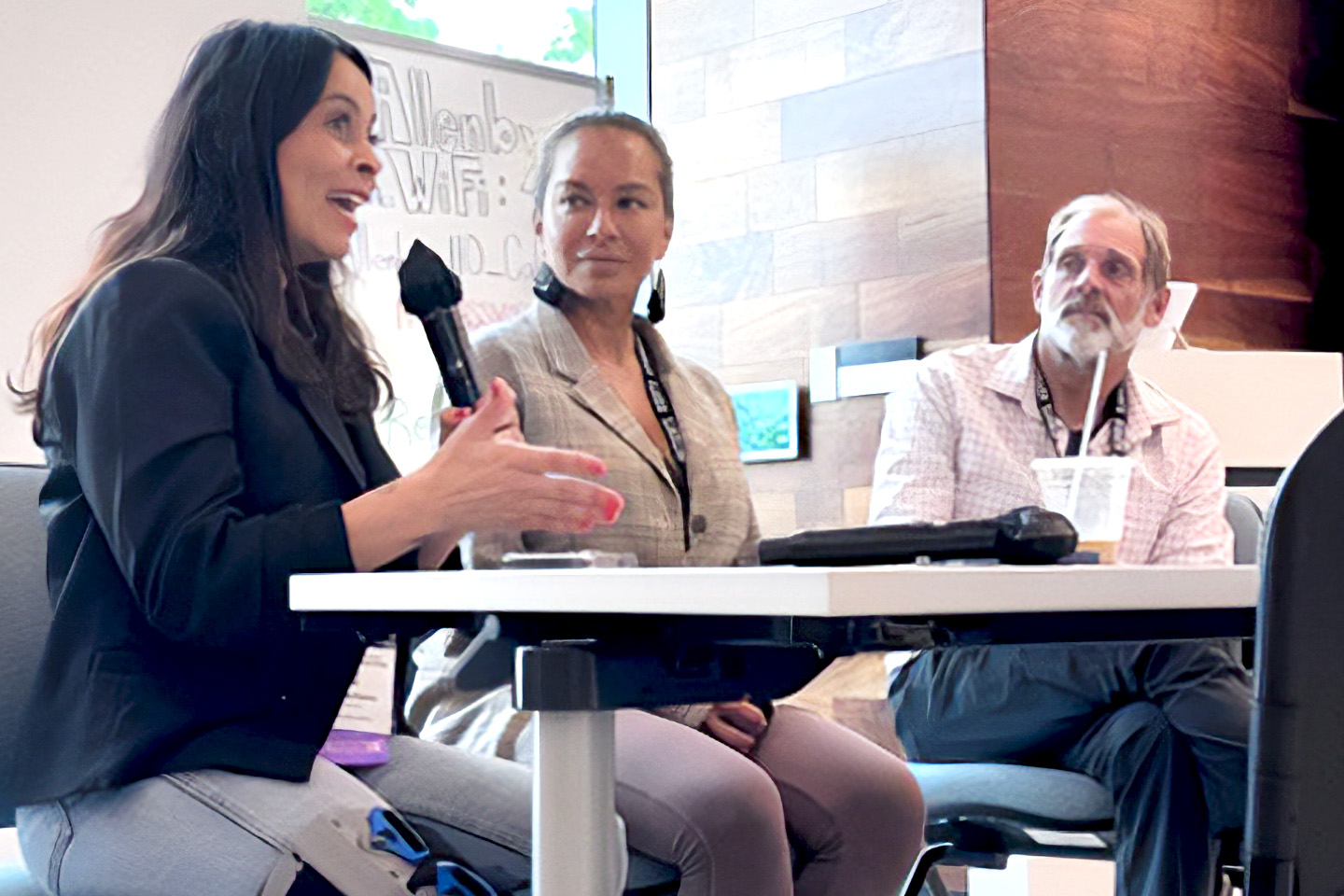
Carolina and Jason now work in the peer services space; Carolina as the CEO and founder of the Happier Life Project, a recovery community organization that provides non-clinical peer-based recovery support services in Riverside County, and Jason as the Director of Advocacy, Business Development, and Training at SHARE! The Self-Help and Recovery Exchange in Los Angeles. Vanessa is a special advisor in DRC’s power building unit and works tirelessly in organizing, connecting and building across peer spaces.
"I come to this work because I have a journey of recovery and experience that helps me understand that whatever it is that people are facing they are powerful together,” Jason Robison said.
In the traditional model of care, a person who is seeking support to stop using drugs, alcohol, or looking for mental health services will receive treatment (if they are even able to access) in a hospital or outpatient facility in a short-term capacity. The panelists talked about how peer services fill the gap that traditional clinical care doesn’t, or as Vanessa put it, psychiatrists and other healthcare providers are the “15-minute type,” in contrast, peer services are the “forever type” of care.
Connection is key
Vanessa described her experience of going through the criminal legal system with mental health disabilities and addiction. She said that the process left her cycling through opening up and shutting back down in clinical settings. Vanessa said that from her experience, the medical system “isn’t created for the heart,” but rather for control of the patient. To tend to her full self, Vanessa said that taking a holistic approach to mental health has been huge for her healing journey, citing art, meditation, and yoga as part of her practice.
Carolina also shared her own experiences trying to find care for her drug addiction, which left her in a cycle of incarceration, addiction, and distrust in the system after giving her child up to Child Protective Services. She knew firsthand how rigid traditional care models could be and was worried she would be punished for being truthful about her experiences. Finally, she was able to reach out to a nonprofit that had peer support services. Carolina said the first thing she asked was, “can I be honest without getting into trouble?” This led her to join a group of women who were just like her—mothers in recovery from drug addiction. Carolina said that having a recovery coach who was a mother with decades of sobriety and who had struggled with the same substances made all the difference for her.
"I come to this work because I have a journey of recovery and experience that helps me understand that whatever it is that people are facing they are powerful together," Jason Robison said.
This connection is integral to recovery and is at the root of why the three panelists spoke so passionately about their experiences. They know firsthand how crucial the peer connection can be. As Vanessa stated:
"Nobody thought that I would be here today, so I don't say it to be repetitive, but truly ‘nothing about us without us.’"