

Disability Pride Month Conversation: Cynde Soto Has a “Fire in My Soul”
Disability Pride Month Conversation: Cynde Soto Has a “Fire in My Soul”




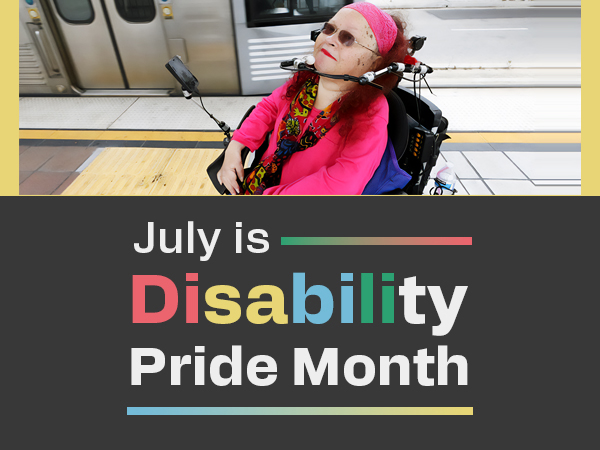
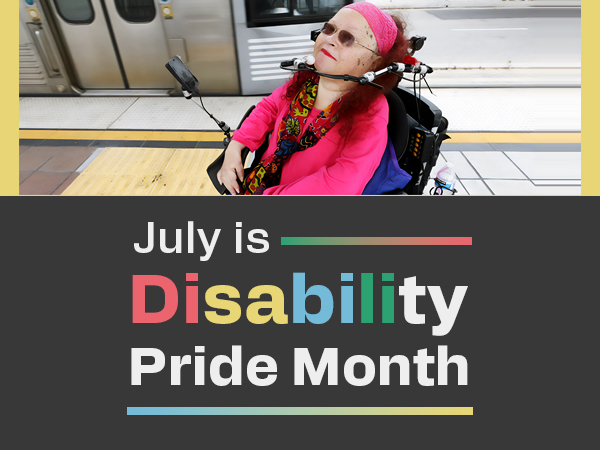
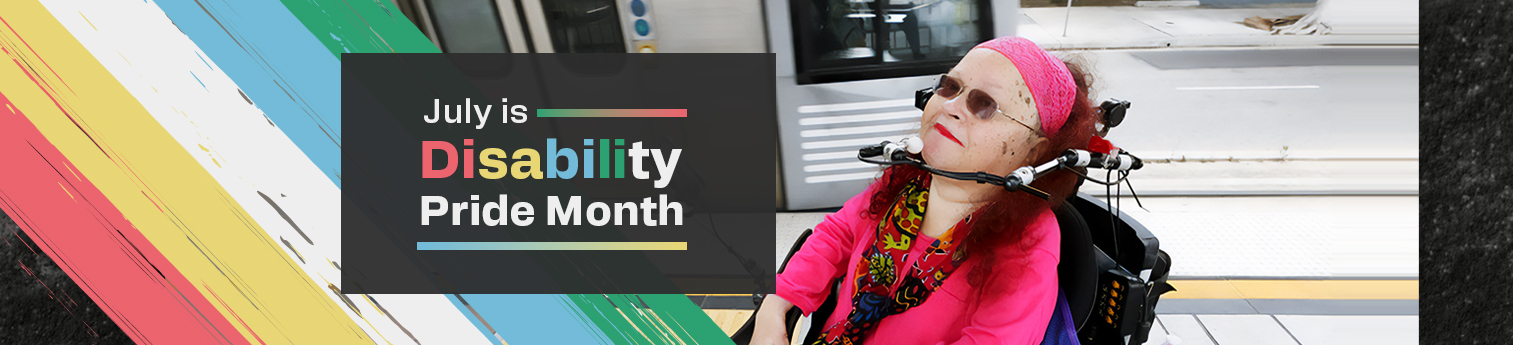
In honor of July as Disability Pride Month, we’re excited to bring you a conversation with Cynde Soto, a disabled elder with decades of experience in disability rights activism. Cynde reflects on growing up as a wheelchair user in San Pedro before the passage of the Americans with Disabilities Act (ADA), shares about her continued advocacy with the Long Beach Gray Panthers, and reflects on protesting in front of Governor Arnold Schwarzenegger’s house. This conversation with Cynde has been edited for clarity.
This month is the anniversary of the passage of the ADA. What was it like for you growing up with a disability before the ADA?
So I was born with a disability. I've always used a wheelchair. And so, where I grew up, it was an unincorporated area. That was still covered in the ADA, right? Well, eventually. And so, there were no sidewalks where I lived. There were no accessible school buses. The driver actually had to pick me up physically and drag me up the stairs. So that was not the most fun thing.
We were a one-car family, so my Dad needed the car to go to work. And so my Mother, we needed to go shopping and go to the doctor or whatever, so my Mother would have to grab me under the arms and drag me up the city bus, so we could get around. And then my sisters, luckily I had three sisters, and so they would have to like man-handle, or “girl-handle,” you might say, my wheelchair up the city bus. And the drivers, you know, they didn't want to get hurt, they didn't want to hurt me, so they wouldn't help at all, which was very difficult for my Mother. I remember that very vividly. One of my main interests is public transportation, and it stems from that. But I see my mother just struggling, you know, and it's just I felt bad for her, but I wanted to go like my sisters.
And then, of course, the school was not accessible, even the neighborhood school. And so my sisters went to the local school, which is right up the way. And I had to go to a special ed school, and so I was in the same school from kindergarten all the way through high school.
You've been part of transportation advocacy for decades. How did you get involved with that work?
After I graduated from high school, I really wanted to do something, because I could see all the inequity everywhere I went, you know? That just made me mad. So, I ended up finding CAPH, California Association of the Physically Handicapped. That's back in the day that we still used “handicap.” So, a friend introduced me to that group and they had a huge group. I mean, oh, 50, 60 people in my area.
I was more, like, burning in my soul. I had a passion for it [transportation activism], and so, so I found ADAPT, and there were way more like “there's no curb cut let's get a, let's get a sledgehammer,” you know, that kind of a thing. That's more of my style. It's not like that anymore--no more sledgehammers. But yeah, we're doing it legal now, mostly.
Can you share a memory from your protesting experiences?
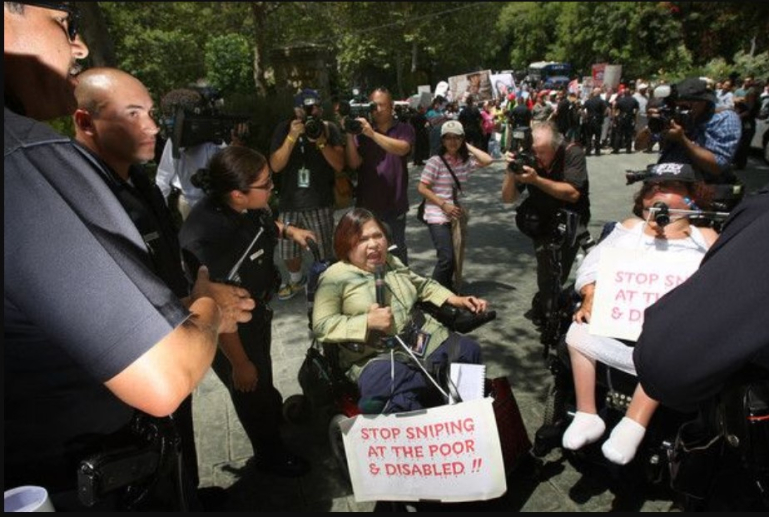
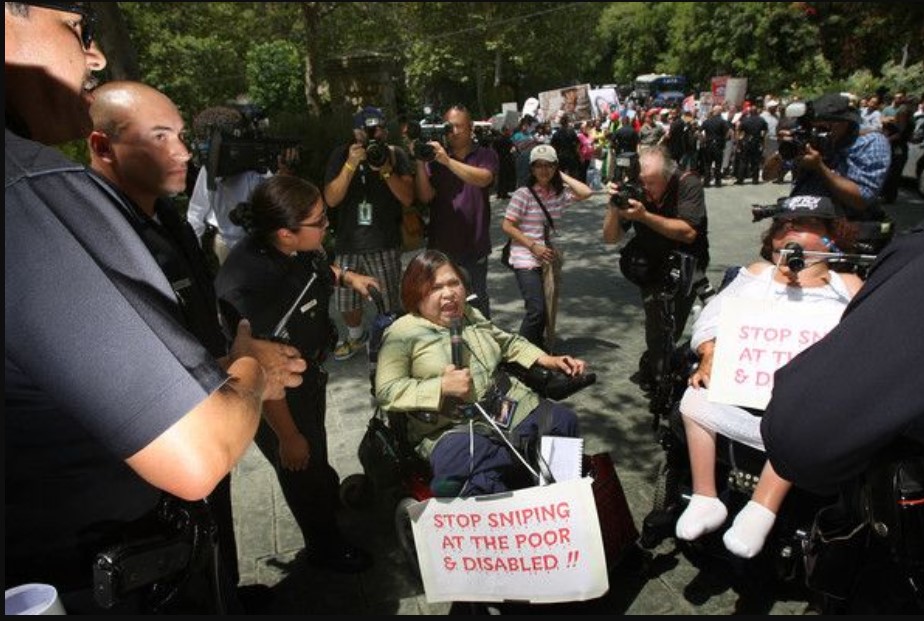
Well, at one point, we decided we didn't like what our Governor Schwarzenegger was going to do with in-home support services, IHSS, and so we decided we were going to go to his house. So we had a lot of support from the IHSS, the SEIU. Yeah, we had a lot of support from them, and they helped us find out where he lived. All that is hush-hush; if you try to look it up on the map, it'll be smudged out. I don't know how they found out, but we were happy.
So, we all got there, and two of us trespassed onto his property. It was beautiful; it looked like a park out front. Some people, they have part of their yard in front of the gate, so we had grass and a couple of trees and a bird fountain out front, and then the driveway went up to his house. So we trespassed onto the driveway and the grass.
So myself and my friend Lillibeth Navarro, she passed away a couple of years ago, her and I trespassed. We rolled all the way up to the fence. Then here comes the police, and they said, “you're trespassing, blah blah blah you’ve got to leave,” but we didn't, we just sat there. They had to grab our chairs and figure out how to undo the brakes. And then they dragged us off of the property and gave us a citation. They didn't actually take us to jail. How were they really going to get us there in motorized wheelchairs?
Do you have any current protest ideas?
I was trying to rile some people up about this idea I had, and people were like “yeah that sounds great,” but then I couldn’t get any real followers. My idea was to buy some toe tags, you know when you die they put the toe tags on? A lot of people couldn’t get to Sacramento, like me, so I was going to give a certain number to organizations, and they could fill out “Cynde Soto died of a lack of caregivers through IHSS,” and then I wanted to mail dozens in one big envelope to the Governor’s office. Very visual, you know? And that’s what you’ve got to do because the media is so “blah” about everything, so you’ve got to make an impact.
You've shared that transportation and home care are two of your top issues. What are you following right now in home care?
For In-Home Supportive Services (IHSS), I'm actually the chair of the public authority for LA County. We have 40 percent of all recipients in the whole state in LA County. So that's like a little over 300,000 recipients and a little over 200,000 providers. We're in trouble. There are not enough providers, and people don't really understand how the program works. And so they're not getting what they need. So we just had a big old knockdown drag-out fight with the Governor mostly.
What do you want people to know about IHSS and how it’s impacted your life?
Well, yeah, but if it wasn't for IHSS, I hate to say it, I'd probably be dead, or I'd be living in an institution. And I could not do the advocacy that I do in an institution. One other thing is we don't have enough IHSS advocates that actually use the service, people that have lived experience. The reason is that they're just worried about, “how am I going to eat tomorrow? How am I going to get out of bed?” They don't have time. They don't have the capacity; that's the way I see it. So, we're going to try to work on that this year.
We are in Disability Pride Month right now. What does disability pride mean to you at the moment?
Well, oh, you know, I could be more loud and proud about the whole thing, because now people are talking about it more, and so I feel more supported. I'm really glad that the general public is learning more about it. I'm sure they never really thought about it. And so it makes life a little easier. We have our own flag, and you know, and everything. And so that's cool. And people can also be more out about their disability. There are so many people with invisible disabilities, and I feel really good about that. It makes me feel more proud and more confident about the whole thing.
How has the Americans with Disabilities Act (ADA) impacted your life?
Well, of course, public transportation! I can get on… in California, I'd say, yeah, pretty much. I can get on any form of transportation, just like everybody else. And. You know, if we don't have proper education, transportation, then how do we go to work? How do we go to school? How do we go… how do we leave our home? So that… that is super impactful, I think. Yeah, I could do train, bus, anything, van, airplane. Well, we'll leave the airlines out of it, right?
What are the Gray Panthers and how did you get involved with them?
Basically, we have everybody over the age of 55, 60. But we have people in their 70s, 80s. We meet once a month, and then we talk about local issues in Long Beach and the couple cities around us, Lakewood, Signal Hill. And we work quite a bit on housing, because housing is so difficult to get, no matter your age, really. And, you know, the people that are unhoused out on the street are age 55 and up.
What would you want to tell people who are experiencing a disability in older life?
Well, what I've noticed before is you set an example by your own life. Accept your limitations and embrace your accomplishments and your abilities.
Where does your fire and tenacity come from?
Probably my grandmother. My grandmother saw the education I was getting. She thought, Cynde, you deserve better than that. So when she was in her 30s, she went back to school and got her “Special Ed” degree. And that wasn't really done a whole lot back in the day. She went to Cal State Long Beach. And so I had good role models in that way.