


50th Anniversary of the Individuals with Disabilities Education Act (IDEA) Education Summit
50th Anniversary of the Individuals with Disabilities Education Act (IDEA) Education Summit




Berkeley, CA – Last week, two leading disability rights organizations hosted an education summit in recognition of the 50th anniversary of the Individuals with Disabilities Education Act (IDEA). Disability Rights California (DRC) and the Disability Rights and Education Defense Fund (DREDF) brought a panel of leading experts in the disability education space to reflect on the history of education for students with disabilities and to look ahead to building a more inclusive educational future for students across the disability community.
The summit featured remarks from Congresswoman Lateefah Simon, Congressman Mark DeSaulnier and State Superintendent of Public Instruction Tony Thurmond, and leaders like former head of the U.S. Department of Education Office for Civil Rights Catherine Lhamon, members of the California School for the Deaf, Maryland School for the Blind, and the San Francisco School Board.
While each panelist infused their remarks with their unique perspective on education, they were united with a clear message: that California needs to bolster its support of students with disabilities, especially in the shadow of the current administration’s efforts to weaken the U.S. Department of Education. The Q&A portion of the summit also reflected this sentiment, with audience members asking panelists how to make sure Native American students aren’t left behind with IDEA, and how to make IEPs (individualized education plans) more student-centered.
This panel of esteemed education experts is ready and available to speak to the future of education policy in California and across the country.
Background:
Signed into law in 1975, the Individuals with Disabilities Education Act (IDEA) guarantees that children with disabilities have free and appropriate public education in the least restrictive environment. A key element of IDEA is individualized education programs (IEPs). IEPs are written plans that are specifically tailored to each student's unique needs, and outline the services and support a student needs to be successful.
Watch the full summit:
Additional materials:
Event quotes, condensed for clarity:
Lateefah Simon – Congresswoman for the 12th district of California: “And for folks without a disability, I don't know if…If you can feel or hear or understand what it's like being a child on your own in an able-bodied space, and being too fearful, a power of ableism to speak up. What 7-year-old, 8—year-old should be put in that position? No child in California should have that experience. No child should be in schools, in recreation, in medical situations without an interpreter, without access to Braille, without access to hearing devices, without access to folks who understand what intellectual disabilities are. As we know, IDEA is not, again, just about access, it is about justice.”
Tony Thurmond – Superintendent of Public Instruction: “I've always known that education is something that can change a life. It changed mine. And to hear someone… I take offense to someone saying that they're gonna get rid of the U.S. Department of Education. The only person who can say that is someone who has benefited from years of private education and wealth and would stand in the way of anyone being able to get an education.”
Mark DeSaulnier – Congressman for the 10th district of California: “We've never fulfilled our obligation to this community. When it (The IDEA) was signed, you know, we (the federal government) were supposed to do 40% of the cost. And I think we're now at 12%. Well, that's not right. We should either go back and change the law and admit to the public and the voters who elect us, that we never meant generationally to actually invest what we promised to do. Or we should be able to explain why we don't do it, or we should do it.”
Alida (Lee) Fisher – San Francisco School Board Member, Executive Director of Community Alliance for Special Education: “But I think really here in California, and when you compare us to the national average, we do a much worse job of inclusion than a lot of other states in the nation. You know only 60% of our students spend the majority of their day in general education here in California. And the national average is 68 percent or 69 percent, so we have a lot of work to do there.”
Dr. Conchita Hernandez Legorreta – Maryland School for the Blind and Conchita Consulting: “There are so many barriers for inclusion and what it actually looks like for blind and low vision students. And there has been a trend, similar to deaf education to close schools for the Blind. Because people are like, we want inclusion, we want inclusion. Yes, but what does inclusion look like without support? That is where we fail our students. Inclusion is not inclusion if students don't have the support to back it up. You're just throwing them into a classroom, without the support that they need.”
Mariza Ochoa, Director, Escuchen Mi Voz, DRC Board member and parent: (Mariza gave her remarks in Spanish and then live interpreted into English) “Y cuando tenemos nuestras juntas de IEPs, las, las familias de habla Hispana. Estamos, somos dos comunidades, una en inglés y una en español. Para poder llegar a una comprensión clara necesitamos intérpretes, esos interpretes tienen que ser culturalmente familiarizados con el idioma que habla la familia. Es que los intérpretes muchas veces no son profesionales y no están familiarizados con la cultura de uno. Muchas veces porque en las juntas de IEP. Porque a veces el intérprete es otra persona que tiene otra ocupación, otro puesto en el, en el distrito, y como hablo español a esas lo ponen como si fueran interprete profesional para poder hacer la interpretación entre estas dos culturas. So, no podemos asumir que cualquier persona que habla español puede tener la capacidad de interpretar.”
(English Translation) And when Spanish-speaking families have our IEP meetings. We are between two communities, one in English and the other in Spanish. In order to reach a clear understanding, we need interpreters, those interpreters need to be culturally familiar with the language the family speaks. Because a lot of the time the interpreters are not professionals and they are not familiar with our culture. Quite often during the IEP meetings, the interpreter will have another occupation, or another position in the district and because they speak Spanish they'll call on them like they're actual professional interpreters who can interpret these two cultures. So we cannot assume that just any person who speaks Spanish has the capacity to interpret.
Henrik Catron – Student, California School for the Deaf (CSD): “My IEP has helped me so much to have access to my education, full communication, resources, and has helped me achieve academically and personally. I'm ready, I have access to everything, and without that IEP, I wouldn't have it. I wouldn't have the most appropriate type of education or schooling placement. I wouldn't have full access to ASL and English. I wouldn't have control of my education as a deaf student.”
Catherine E. Lhamon – Director, Edley Center on Law and Democracy, former Chair of U.S. Commission on Civil Rights & Assistant Secretary for Civil Rights at U.S. Department of Education: “Now is the time for us to be advocating in our state to make sure that the laws as they are written are the experience of our students in schools. And it could not be more acute as a need for us as a state than right now, than it is. And the kinds of experiences that we know students still have in schools, and I say that from having been the chief civil rights enforcer in the nation's schools, and from having been an advocate here in California on behalf of students in schools, the kinds of harms that our kids will experience absent a meaningful backstop, are limitless and appalling, so we need to be advocating together.”
Malaika Parker – Co-Director, Black Organizing Project: “Students with disabilities are about 16% of the population in Oakland Unified School District, but make up about 40% of the children that are referred for expulsion. All of the children with disabilities who were actually expelled were people of color. So we understand, like, talking about the intersectionalities of our experiences, right? All of the different ways that our children are pushed out of schools, are pushed out of community, and then push directly into the line of policing, into the line of the juvenile justice system. And our work is really to interrupt that, right, and to demand that we build out communities that are present for our children.”
Photos:
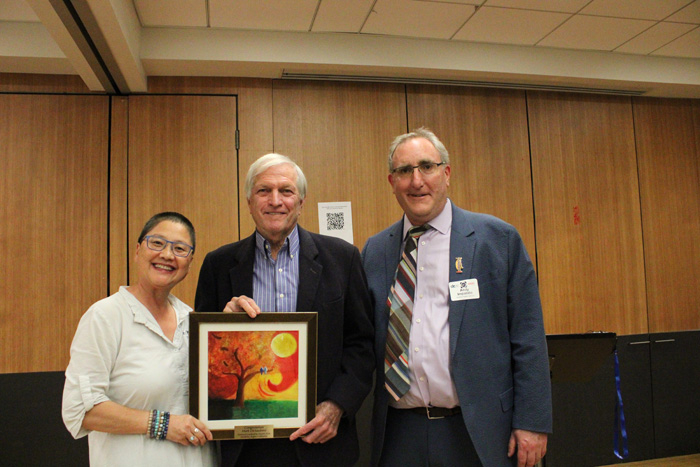
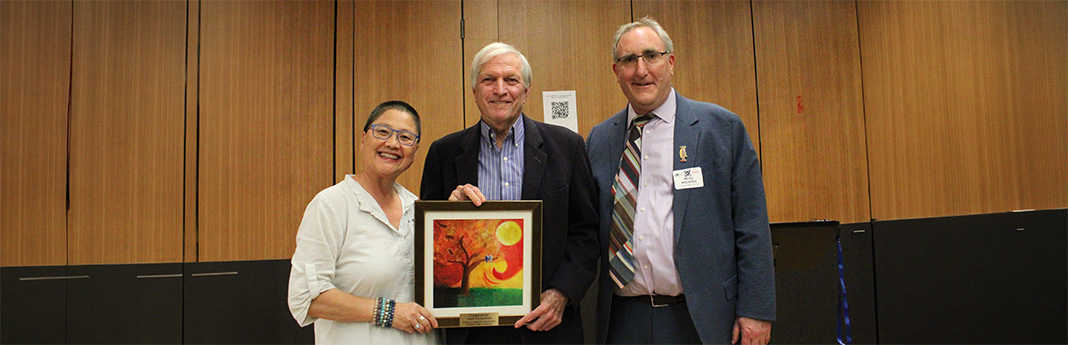
Caption: Left to right: Tho Vinh Banh, special advisor to Strategic Partnerships and Community Engagement (SPACE) with Disability Rights California, Mark DeSaulnier, Congressman for the 10th district of California, and Andy Imparato, CEO of Disability Rights California presented Congressman DeSaulnier with DRC’s National Leadership Award for his work advocating for students with disabilities.
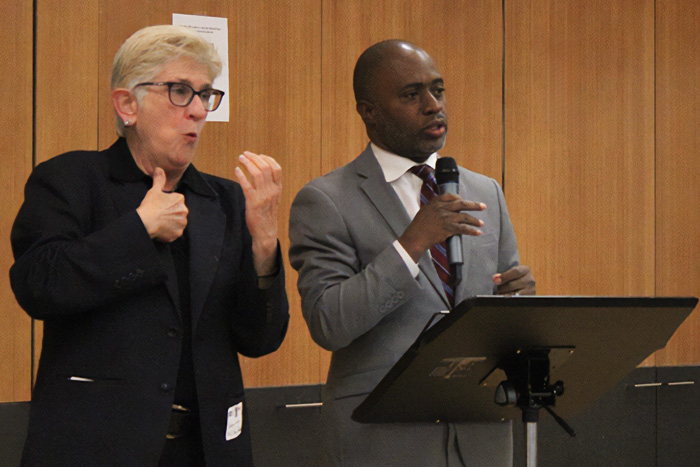
Caption: Tony Thurmond, Superintendent of Public Instruction spoke about the importance of funding for the U.S. Department of Education at the IDEA Education Summit.
Caption: Congresswoman Lateefah Simon addresses the 50th Anniversary of the Individuals with Disabilities Education Act Education Summit.
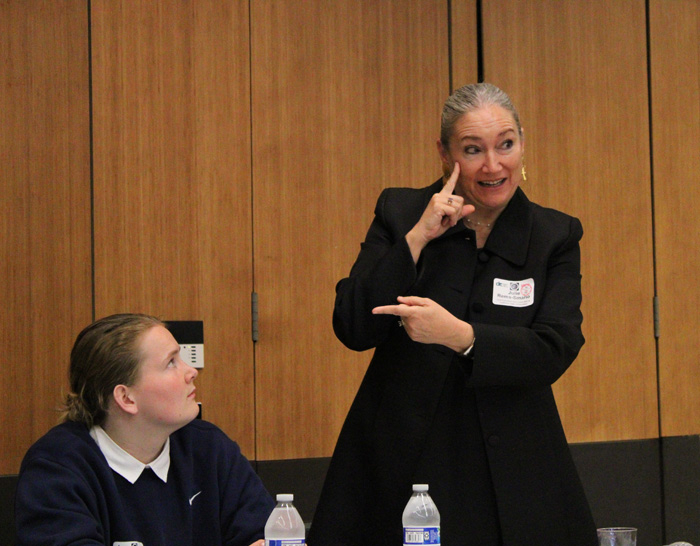
Caption: Panelist Julie Rems-Smario, Deaf Education Unit Consultant at California Department of Education, signs in ASL at the 50th Anniversary of the Individuals with Disabilities Education Act Education Summit.
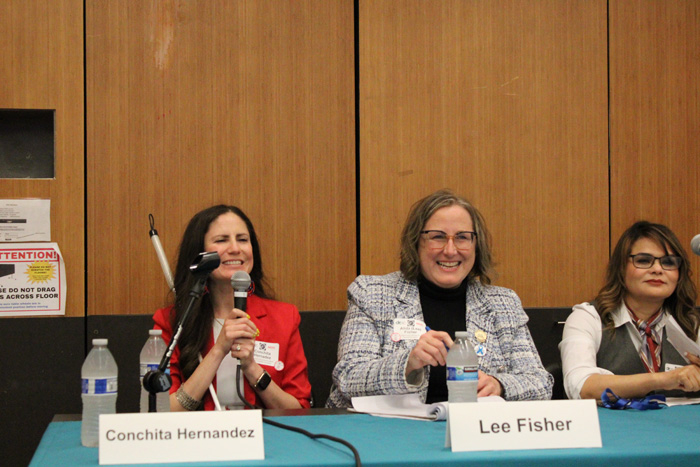
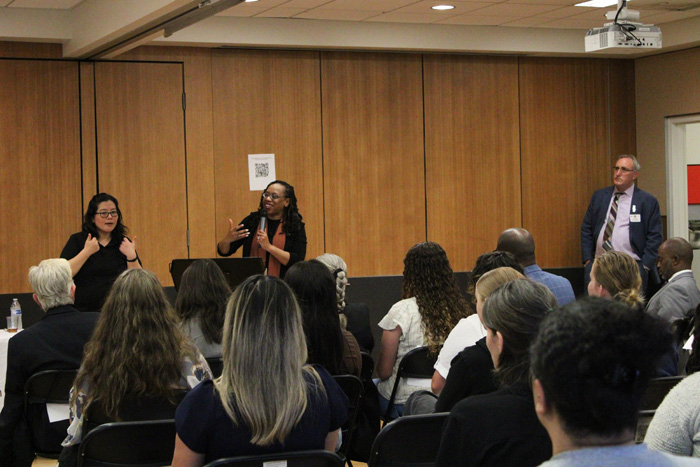
Caption: Left to right: Panelists Dr. Conchita Hernandez Legorreta, Alida Fisher, and Mariza Ochoa speaking at the 50th Anniversary of the Individuals with Disabilities Education Act Education Summit.
Media Contacts
Sam Mickens
Communications Director
Disability Rights California
sam.mickens@disabilityrightsca.org
(646) 945-0918
Disability Rights California (DRC), Is the agency designated under federal law to protect and advocate for the rights of Californians with disabilities. The mission of DRC is to defend, advance, and strengthen the rights and opportunities of people with disabilities.