


Disability Poverty Traps
Disability Poverty Traps




Many programs that are meant to help poor and disabled Americans are set up with rules that force people to stay poor in order to keep the support they need. We call these “poverty traps.” These programs were deliberately structured this way, giving people just enough money to survive, but not allowing them to have enough to meaningfully improve their lives and conditions.
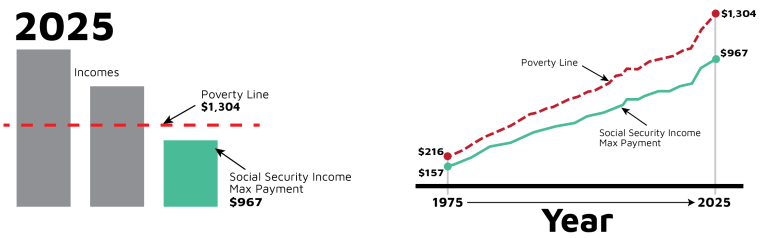
For example: Supplemental Security Income (SSI), created in the early 1970s as a federal safety net for the elderly, blind, and disabled, was set below the federal poverty line from the start and our government has chosen to keep it there ever since. In 2025, the highest supplemental security income payment for one person was $967, while the poverty line for a single adult was $1,304.
Additionally, if you receive SSI due to your disability, you’re not allowed to have more than $2,000 in total assets (or in a bank account) as an individual, otherwise the Social Security Administration can suspend or take away your cash assistance. These rules make working, saving, or pursuing anything that could stabilize a person further genuinely risky.
Poverty traps exist across all kinds of support systems, and when these systems intersect, a series of financial and emotional catastrophes unfold. But this is our money, all of these programs are funded through our taxes, yet they have been built to prevent people from improving their conditions.
Ending these poverty traps and giving more of the peoples’ own money back to them would put individuals and communities back in control of their own economic security and dignity, their own independence, the full humanity that has always rightfully been theirs.