

Our History

Our History




Our History
 - Nationwide Event
 - DRC Event
1972 Geraldo Rivera exposes conditions at Willowbrook
 In 1972, a New York television station ran an investigative series by Geraldo Rivera about abuses at Willowbrook, a state-run institution for children with intellectual disabilities. As a result, Congress amended the Developmental Disabilities and Bill of Rights Act in 1975 to create the Protection and Advocacy (P&A) systems. Each state and territory has a P&A to advocate for the rights of people with disabilities.
1973 Rehabilitation Act
 The Rehabilitation Act of 1973 was one of the first US laws giving protection to people with disabilities. It gives civil rights protection to federal employees, federal contractor employees and people participating in programs receiving federal money. The government delayed regulations. This led to the 1977 section 504 demonstrations. In San Francisco, people took over the federal building until the government agreed to issue regulations.
1978 ADAPT founded
 ADAPT was founded in 1978 to fight for the rights of people with disabilities to live as equals, free and able to pursue liberty and justice and a life of quality. ADAPT grew out of a group of people who fought to free people from institutions so they might live in the community. ADAPT has organized actions across the US on a variety of issues, including Medicaid cuts in 2011, access to public transportation and deinstitutionalization.
1978 Founding of DRC
 From the beginning, Disability Rights California has passionately advocated for the rights of Californians with disabilities by litigating, legislating, investigating, educating and representing clients. Congress called for creating an organization within each state and territory to advocate for the rights of people with developmental disabilities. In 1978, Governor Jerry Brown designated Disability Rights California, then known as Protection & Advocacy, Inc. (PAI), as this state’s organization with headquarters in Sacramento.
1983 CA Network of Mental Health Clients and People First founded
 People with lived mental health experience and developmental disabilities worked to have their voices heard during the 1980s. The California Network of Mental Health Clients was a statewide advocacy voice by and for people with mental health disabilities on public policy issues. It was one of the first peer-to-peer organizations. People First of California and Capitol People First in Sacramento were started with the philosophy of “people helping their peers to learn to speak up for themselves, learn about their rights and responsibilities, learn how to make decisions and solve problems, and be contributing members of their community.”
1983 DRC stops Social Security from terminating benefits - Lopez v Heckler
 In one of its earliest and most important cases, DRC took on the Social Security Administration (SSA) for denying benefits to people with disabilities. According to Marilyn Holle, lead attorney, the U.S. Ninth Circuit Court of Appeals ruled that before you terminate someone’s benefits, you must prove that person’s health improved. Instead, the SSA treated a person’s review as if they were applying for benefits for the first time and used invalid standards to decide about awarding benefits. DRC and other organizations identified many people affected by this practice. They found that some people committed suicide when they lost their benefits. In Lopez v Heckler, the U.S. Ninth Circuit Court of Appeals reinstated SSI benefits and required the administration to show substantial evidence that a person was no longer disabled.
1985 US Supreme Court Case – City of Cleburne v Cleburne Living Center
 City of Cleburne v. Cleburne Living Center, Inc. was a 1985 US Supreme Court case about discrimination against people with intellectual disabilities. Cleburne Living Center applied for a permit to build a group home. Cleburne, Texas refused to grant a permit based on a zoning ordinance. The center sued saying the denial violated the Constitution’s Fourteenth Amendment’s Equal Protection Clause. The court struck down the ordinance based on constitutional issues.
1986 Protecting Reproductive Rights
 Valerie N. had Down syndrome and was at the center of one question: Do conservators have the right to have someone sterilized. Valerie’s parents were her conservators and they filed a petition to have her sterilized. The court denied their request and they appealed. DRC filed an amicus brief. The California Supreme Court held that the Legislature intended to discontinue the longstanding, but discredited, practice of eugenic sterilization. The Court also upheld the denial of Valerie N’s sterilization because the evidence did not show there were not less intrusive means to avoid conception. The Supreme Court also held that the law which created an absolute prohibition of sterilization of developmentally disabled persons deprived them of privacy and liberty interests, including reproductive rights. In 1986, Governor Deukmejian signed AB 3900 establishing safeguards in authorizing conservators to give substitute consent for sterilization with due process protections. DRC provided assistance in drafting the bill.
1988 Deaf people get communication access
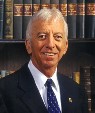 In the 1980s, the Deaf community achieved two successes in the area of access. California created the first Deaf Relay System. With relay services, people could call hearing family and friends, make appointments, order pizza, and make other calls. The Americans with Disabilities Act modeled some provisions after California’s relay service. Gallaudet University (a 120-year-old university for deaf and hard of hearing students) selected a hearing person as its seventh president. Unhappy with this decision, Gallaudet students, backed by alumni, staff, and faculty, shut down the campus. The students stopped protesting when Dr. I. King Jordan became Gallaudet’s first deaf president.
1989 DRC stops people with mental health disabilities from being involuntarily medicated
 Eleanor Riese bravely fought for the rights of people with mental health disabilities to be treated with dignity. In 1985, St. Mary’s Hospital in San Francisco forced Eleanor, who had schizophrenia, to take antipsychotic medication even though she objected. One of the medications severely damaged her kidneys. DRC joined another firm in the appeal of the lawsuit against the hospital. The California Court of Appeals held that individuals involuntarily committed to hospitals have statutory rights to exercise informed consent to the use of antipsychotic drugs in nonemergency situations absent a judicial determination of their incapacity to make treatment decisions and the State Supreme Court let that decision stand. The ruling was codified in state law. The decision and Eleanor’s compelling story are now an international film, “55 Steps.”
1990 American’s with Disabilities Act (ADA)
 The Americans with Disabilities Act (ADA) was the result of people with disabilities working for years to change societal attitudes, parents working to include their children in schools and the independent living movement, which challenged the idea that people belonged in institutions. The Civil Rights Act of 1964 was the model for the ADA. It gives civil rights protections to people with disabilities that are like those given to people based on race, sex, national origin, and religion. It guarantees equal opportunity in employment, public accommodations, transportation, state and local government services, and telecommunications.
1993 DRC creates the California Office of Patient’s Rights (COPR)
 Residents in state psychiatric hospitals have rights too. In 1993, state law was changed to require independent patients’ rights advocates at state hospitals. Before this law, the state hospitals employed the advocates. DRC contracts to provide these advocacy services through its California Office of Patients’ Rights (COPR). COPR also provides expertise and training to county patients’ rights advocates. COPR’s advocacy protects the rights of state hospital residents. For example, Louise contacted COPR complaining that she had been wearing her contact lenses round-the-clock since she was admitted a month before. Hospital staff didn’t believe her. A COPR advocate spoke to the treatment staff on her behalf and a physician safely removed them.
1992 First “Mad Pride” held
 “Mad Pride”, started in 1992, is a mass movement of the users of mental health services, former users, and their allies. They are proud of their “mad” identity and work to educate the public about mental health issues. In 1992, the US Supreme Court ruled in Riggins v. Nevada that a criminal defendant has the right to refuse medication given to lessen psychiatric symptoms while on trial. This was the first time the Supreme Court found forced treatment must be the least intrusive treatment and medically appropriate for the defendant’s safety.
1993 Coffelt v Department of Developmental Services
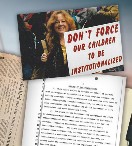 On January 19, 1993, before a packed San Francisco Superior courtroom, Judge Stuart Pollack approved the settlement agreement in Coffelt v Department of Developmental Services (DDS). The settlement in this class action lawsuit – to move more people from institutions into the community – was the largest of its kind in the country. Ellen Goldblatt was the lead Protection and Advocacy, Inc. (PAI) attorney on the case. She said the lawsuit shed light on the fact that at least 2,000 out of 6,000 developmental center residents still lived in institutions only because the state had not created enough community resources for them. The Lanterman Act and other California laws mandated those services. The settlement called for and funded a five-year plan in which DDS and the regional centers were required to provide community living arrangements.
1994 Sacramento City Unified School District v. Rachel Holland
 In 1994, the U.S. Ninth Circuit Court of Appeals in Sacramento City Unified School District v. Rachel Holland affirmed the right of students with disabilities to attend public school classes with non-disabled students rather than segregated classes. The Court held that before denying inclusion in regular classes, school districts have to show placement in a regular class with support services and supplementary aids will not benefit the student.
1996 Chanda Smith v Los Angeles Unified School District
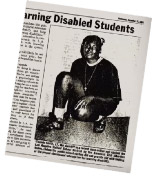 Chanda Smith was a sophomore at Manual Arts Senior High School in 1993. She did not pass the 10th grade the previous year. She had a learning disability not recognized by school staff. They thought she didn’t try hard enough. Chanda’s mother knew the school failed to give her the supports and services she needed to succeed. The ACLU and others filed suit against the district. DRC later joined the suit, led by Executive Director Catherine Blakemore. The litigation resulted in a consent decree governing special education services in the largest school district in California. It is a blueprint for creating and implementing a comprehensive system to provide special education services to 80,000 students with disabilities. DRC continues to monitor the district’s compliance.
1996 Activists form “Not Dead Yet”
 Throughout the 1990s, people raised concerns with assisted suicide and made strides in the courts to deinstitutionalize people. In 1996, a group of national, grassroots disability rights activists founded “Not Dead Yet.” It opposes legalization of assisted suicide as deadly forms of discrimination against people with disabilities.
1998 A thousand young people receive intensive behavioral health support
 Twenty years ago, a foster child named Elizabeth Quinones was sent to Metropolitan State Hospital because of her challenging behavior and mental health needs. In response to her behavior, staff tied her to her bed and isolated her from others. DRC attorneys learned about the case and investigated. Elizabeth pleaded with DRC to get her out of the institution, according to Melinda Bird, senior litigation counsel, who was a lead attorney on the case. In 1998, DRC and co-counsel filed a federal class action lawsuit to make California cover the services that Elizabeth and other children like her needed to live safely in the community. The lawsuit led to the creation of an entirely new mental health service for children and youth called Therapeutic Behavior Services, or TBS. Elizabeth was released from the state hospital in 2003 and lives in the community with support.
1997 Web Accessibility Initiative
 As the internet expanded, changes happened to ensure disability access. The Telecommunications Act of 1996 requires that manufacturers of telecommunications equipment and providers of telecommunications services ensure equipment and services are accessible to and usable by people with disabilities, if readily achievable. This allows people with disabilities to access a broad range of products and services such as telephones, cell phones, pagers, call waiting, and operator services. In 1997, the World Wide Web Consortium developed the Web Accessibility Initiative to make the internet more accessible.
1999 DRC opens Office of Clients’ Rights Advocacy
 Following state legislation requiring independent advocacy, the Department of Developmental Services awarded DRC a contract in 1999 to help consumers of California’s 21 regional centers receive the services they need. The Office of Clients’ Rights Advocacy (OCRA) advocates for those with intellectual and developmental disabilities. “People need to have control over their own lives,” said Director Katie Hornberger. “They need to have the satisfaction of choosing the services that make the most sense to them.” For example, a Clients’ Rights Advocate helped a client whose money manager cut the individual’s pocket spending money in half. The client reclaimed his full allowance and found a new person to manage his finances. Over the years, OCRA has increased its work with people living in institutions and those moving out of state facilities.
2002 Help America Vote Act
 In 2002, Congress passed the Help America Vote Act. It made sweeping reforms to the US voting process. One of the most significant changes was a requirement that voting systems allow people with disabilities to vote privately and independently. Something many people with disabilities, such as people who are blind, have manual dexterity disabilities or learning disabilities, could not do prior to passage of the Act.
2002 California Memorial Project; remembering those who died in institutions
 From the mid-1800s to the 1960s, an estimated 45,000 people died while living in state institutions. For the most part, the state placed the remains in unmarked mass graves and records are incomplete. In 2002, disability rights advocates, including Disability Rights California's Peer Self-Advocacy Program began an effort to restore the graves and collect the names of those who died. Former State Senator Wesley Chesbro carried a bill, SB 1448, establishing the California Memorial Project (CMP) to honor and restore dignity to those individuals who lived and died in state institutions. In 2010, Chesbro’s resolution proclaimed the third Monday in September as California Memorial Project Remembrance Day with ceremonies throughout the state.
2001 Peer Self-Advocacy Project becomes its own program
 Disability Rights California's Peer Self-Advocacy Program (PSA) promotes the concept that sharing personal experiences and feelings is a powerful tool to help people with mental health disabilities learn about their rights. PSA’s goals are to help people understand their human, legal and service rights. “We focus our work on teaching people how to advocate for themselves rather than providing direct advocacy,” said Robyn Gantsweg, PSA Unit Manager. The PSA helps peers start their own self-advocacy groups. UCLA student Taylor Tabbut used the tools she learned through PSA to help fellow college students get the services they need from the university. “I’m trying to create an environment where people treat each other with compassion and understand their differences,” she said.
2003 DRC successfully fights closure of hospital serving people with disabilities
 The County of Los Angeles founded Rancho Los Amigos National Rehabilitation Center or “Rancho” in 1888. It is a respected, nationally known rehabilitation hospital for people with disabilities. Fifteen years ago, LA County faced a budget crisis and proposed closing Rancho. No other facility faced complete closure. DRC led a team of attorneys and public interest firms in a challenge to Rancho’s closure. The lead plaintiff in the case was Susan Rodde who had received services at the hospital since she was a child. The US Ninth Circuit Court of Appeals found in Disability Rights California's favor. “We won a wonderful decision talking about how targeting a cut at people with disabilities violates the Americans with Disabilities Act and constitutes discrimination,” said Melinda Bird, Disability Rights California's lead attorney on the case.
2004 DRC Investigations Unit uncovers serious incidents of sexual abuse and pushes for reforms
 People with developmental disabilities are at a higher risk of abuse, neglect, and being victims of crime. Disability Rights California's Investigations Unit has investigated terrible incidents of sexual abuse and pushed for reform to ensure these assaults are promptly reported. In 2005, Daniel Sharp, 30, with a developmental disability, was sexually assaulted in the locker room at his health club. He reported the incident to his mother who called police who did not bring charges. In 2010, DRC took action, including issuing an advisory to every law enforcement agency in the state. DRC called for law enforcement agencies to follow Commission on Peace Officer Standards and Training guidelines for sexual assault investigations.
2004 DRC reached settlement with San Francisco over Laguna Honda Hospital
 Mark Chambers was a successful computer systems manager before he got a head injury in 1999. He entered Laguna Honda Hospital and Rehabilitation Center, a large nursing facility in San Francisco. “I don’t want to spend the rest of my life here,” Chambers said in 2006. He and five other residents of Laguna Honda and the Independent Living Resource Center filed a class-action lawsuit to challenge unnecessary confinement to an institution. Elissa Gershon, Disability Rights California's lead attorney on the case, said, “Our successful, groundbreaking agreement forced the city to provide subsidized, accessible housing and other services so Laguna Honda residents could live in the community.” The settlement also led to enhanced mental health and substance abuse services.
2006 National Federation of the Blind v Target
 The blind community made access strides in the early 2000s. A US District Court determined in National Federation of the Blind v Target Corp. that the ADA and California law applies to websites and the Internet.
2006 UN adopts Convention on Rights of Persons with Disabilities
 The Convention on the Rights of Persons with Disabilities, adopted in 2006, is an international human rights treaty of the United Nations. Parties to the Convention must ensure the full enjoyment of human rights and equality under the law. The Convention helped make changes globally from viewing people with disabilities as objects of charity, medical treatment and social protection, to viewing them as full and equal members of society, with human rights.
2008 American Council of the Blind v Paulson
 A US District Court in American Council of the Blind v Paulson ruled that American paper money gave an undue burden to people who are blind. The bills denied them “meaningful access” to the US currency system. Because of the lawsuit, the Bureau of Engraving and Printing is placing a raised tactile feature in the next redesign of each note, except the one-dollar bill.
2008 Mental Health Parity Act
 The federal Mental Health Parity and Addiction Equity Act of 2008 prevents health insurance providers from offering less favorable benefits for mental health issues as for medical issues. Mental health parity means equal coverage for health care. In 2014, the Affordable Care Act expanded the Mental Health Parity and Addiction Equity Act to apply to almost all forms of health insurance. California passed a mental health parity law in 1988 that applies to private insurers.
2008 ADA Amendments Act
 The Americans with Disabilities Act Amendments Act of 2008 clarifies that the definition of disability favors the broadest number of people and generally does not require extensive analysis. It rejects the holdings in several Supreme Court decisions. The effect of the changes is to make it easier for a person to establish they have a disability within the meaning of the ADA.
2009 Successful fights against state budget cuts
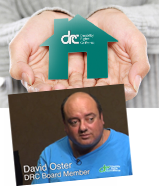
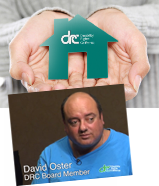 DRC prevailed in three cases involving government budget cuts to critical community-based services. In 2009, David Oster learned his IHSS would be eliminated. These cuts put him and 130,000 low-income people with disabilities at risk of institutionalization instead of living in their own homes. DRC reached a settlement fully restoring IHSS hours. That same year, the state tried to cut Adult Day Health Care. Seventy-six-year-old Esther Darling was one of 35,000 people who risked losing health services and going into a nursing home. DRC reached a settlement with the state preventing that from happening and Morgan Lewis on a probono basis agreed to represent clients in individual hearings. In Napper v County of Sacramento DRC and Cooley, our probono counsel, stopped the county from ending critical community mental health services. Leslie Napper, lead plaintiff, said our success is why she is here today.
2010 21st Century Communications and Video Accessibility Act
 Access to communication and website information continued to expand in the 2010’s. In 2010, President Obama signed the Twenty-First Century Communications and Video Accessibility Act into law. The Act updates federal communications law to increase the access of people with disabilities, including people who are deaf or blind, to modern communications, including new digital, broadband, and mobile innovations.
2011 DRC fights for humane conditions and access to services for inmates with disabilities
 When prisoners with disabilities face harm or lack of mental health services in jails, DRC advocates for access to appropriate services. In 2011, we filed a class action lawsuit against Fresno County claiming Sheriff Margaret Mims maintained dangerous jail facilities and failed to provide basic health care to prisoners. In 2013, we agreed to a settlement increasing staffing and improving access to mental and physical health care in the jail. We reached a landmark settlement in 2014 with the Los Angeles County to improve physical access in jails. Former inmate and plaintiff Peter Johnson, had his personal wheelchair confiscated and was issued a broken wheelchair with no brakes. When he tried to transfer to a bed or toilet, he fell. Without footrests, his feet dragged on the ground. The settlement included the construction of wheelchair accessible toilets, new housing for inmates with disabilities, and a new system to deliver working wheelchairs to inmates. Today we continue our efforts to stop harmful conditions and secure access to mental health treatment in Mays v. County of Sacramento and Murray v. County of Santa Barbara.
2012 Peer Specialist Programs
 The effectiveness of peer-to-peer services in mental health services was recognized during the 2000s. By 2012, 36 states established programs to train and certify peer specialists with lived experience to work in the mental health services field. Peer specialists are willing to support others in their recovery process. Peer specialists model recovery, teach skills, and offer supports to help people lead meaningful lives in the community. Peer specialists promote recovery and supplement existing treatment with education, empowerment, and aid in system navigation. Unfortunately, after multiple legislative efforts peer-to-peer services are not yet available in California.
2012 Ensuring access in the community
 We work to make sure people with disabilities can live wherever they choose. In 2012, Independent Living Center of Southern California (ILCSC) and several other groups joined for a lawsuit to improve affordable housing for people with disabilities in the City of Los Angeles. DRC was co-counsel on behalf of the three advocacy groups. The LA City Council agreed to settle the suit in 2016. Over the next 10 years, the city will ensure that at least 4,000 of its affordable housing units meet the accessibility standards required by law. DRC also prevailed over the City of Torrance. Client Katie Bassilios has a disability that makes it difficult for her to walk farther than 50 feet. Katie asked the city to designate a space in front of her apartment building as disabled parking by painting the curb blue. It would have been a minimal cost. The city refused so DRC sued on behalf of Katie – and we won. She got her space and said, “It’s a liberating feeling.”
2014 Workforce Innovation and Opportunity Act
 In 2014, President Obama signed the Workforce Innovation and Opportunity Act into law. Among other things, the Act increases people with disabilities’ access to high-quality workforce services and prepares them for competitive integrated employment.
2014 Disability Rights California works to improve law enforcement’s response to people with mental health crisis
 In 2014, DRC released “An Ounce of Prevention: Law Enforcement Training and Mental Health Crisis Intervention.” This report examined the training California law enforcement receive in addressing mental health crisis calls. DRC surveyed every law enforcement agency in California about whether they offer their officers Crisis Intervention Training (CIT) or any specialized, intensive mental health-training course. To improve officer training and response to individuals in crisis and reduce stigma, DRC recommended the Peace Officers Standards and Training Commission (POST) take the lead in ensuring that officers receive specific training in responding to mental health crisis calls.
2015 Immigrants and disability
 Immigrants with serious mental disabilities deported from Arizona, California, and Washington can ask to reopen their immigration cases because of a 2015 settlement in a federal lawsuit Franco v. Holder. A court ruling held immigrants with serious mental disabilities have a right to legal representation if they are determined not competent to represent themselves. The three states deported covered immigrants between 2011 and 2015. In 2018 DRC used its federal authority to monitor conditions in detention centers and ensure that children and young adults were not abused or neglected.
2013 - 2018 DRC achieves many legislative successes
2013 – SB 555 - Former Senator Lou Correa’s bill required regional centers offer individual program plans (IPP) in a consumer’s native language.
2013 – SB 468 - Former Senator Bill Emmerson successfully carried a bill requiring the state to develop a self-determination program that provides consumers with an individual budget and increased flexibility to buy the services they find most useful to live and work in the community.
2015 – SB 11 and SB 29 - Senator Jim Beall’s bills requiring the California Peace Officer Standards and Training Commission (POST) to review their basic academy level training course on interacting with individuals with disabilities.
2018 – AB 2657 - Assemblymember Dr. Shirley Weber’s landmark bill limits the use of seclusion and restraint in California schools for all students, including students with disabilities.